AI tools for research have exploded over the past few years. Students and academics now have access to platforms that can summarize papers, extract insights, and even help draft literature reviews.
One tool that has started gaining attention among researchers is AnswerThis.
Unlike many AI tools that simply summarize PDFs, AnswerThis is designed to help researchers move through the entire research process, from finding papers to identifying research gaps and structuring literature reviews.
In this review, we’ll explore how AnswerThis works and examine several ways it can help researchers work faster and more efficiently.
If you’re interested in using AI for research, this guide will show where AnswerThis fits into the growing ecosystem of academic AI tools.
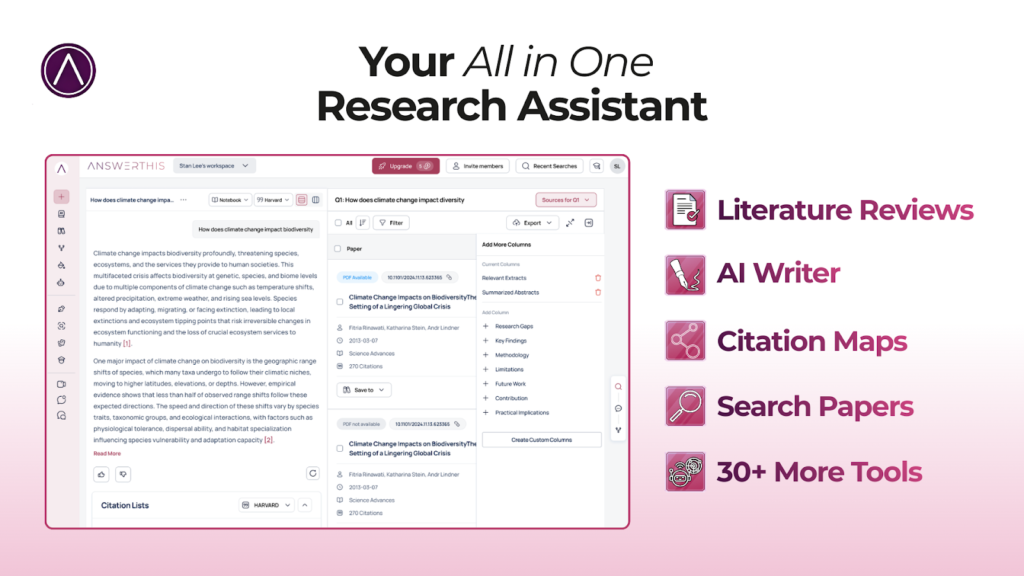
Table of Contents
What is AnswerThis?
How does AnswerThis work?
Is AnswerThis reliable?
Use Case 1: Generate Literature Reviews Faster
Use Case 2: Identify Research Gaps
Use Case 3: Improve Your Research Writing
AnswerThis vs Other AI Research Tools
ChatGPT vs AnswerThis
NotebookLM vs AnswerThis
Summary
What is AnswerThis?
AnswerThis is an AI research assistant designed specifically for academic workflows.
Instead of acting like a general chatbot, it focuses on helping researchers discover papers, extract insights, and synthesize findings into structured summaries.
The platform searches across a massive database of academic publications and then organizes insights from multiple papers into coherent answers supported by citations.
Compared to many AI research tools, the goal of AnswerThis isn’t just to summarize documents. It’s to help researchers understand how different papers connect and where gaps in the literature exist.
Some of the main capabilities include:
- AI-powered research search across millions of academic papers
- Literature review generation with citations
- Research gap identification
- AI writing and paraphrasing tools for academic text
- Notebook workspace for organizing research findings
- PDF interaction for exploring sources more deeply
These features make it particularly useful for students working on theses, dissertations, or large literature reviews.
How Does AnswerThis Work?
AnswerThis works differently from many AI tools that rely primarily on uploaded documents.
Instead of only analyzing files you provide, the system searches academic literature and then synthesizes relevant studies into structured summaries.
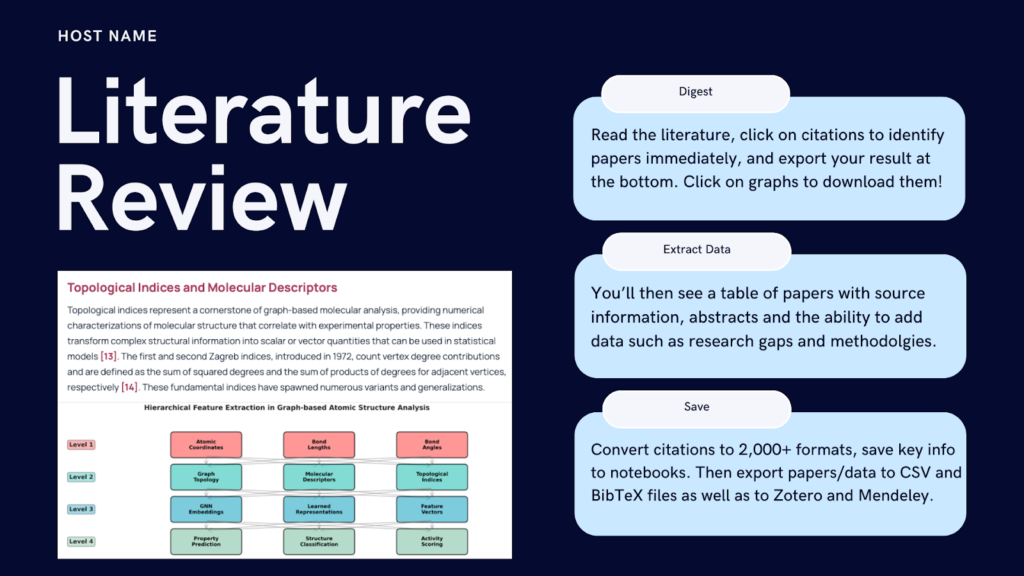
The workflow typically looks like this:
- Enter a research question or topic.
- The platform identifies relevant academic papers.
- It extracts key findings across multiple studies.
- The AI organizes insights into a structured explanation with citations.
Because the answers draw directly from research papers, users can easily trace claims back to their original sources.
This makes the tool particularly useful during the early stages of research, when you’re trying to understand a new topic quickly.
Is AnswerThis Reliable?
When evaluating AI for research, reliability is one of the most important factors.
Unlike many general-purpose AI systems, AnswerThis focuses on academic sources rather than general web content. This reduces the likelihood of hallucinated information.
Each claim in generated summaries is linked to supporting studies, allowing researchers to verify sources easily.
Of course, like any AI system, the quality of results depends on the available literature and how clearly the research question is phrased. Researchers should always verify citations before including them in published work.
However, the citation-based approach makes AnswerThis safer to use than many tools that generate text without clear academic references.
Use Case 1: Generate Literature Reviews Faster
One of the most time-consuming parts of research is building a literature review.
Traditionally, researchers need to read dozens of papers and manually extract findings before connecting them into a coherent narrative.
AnswerThis significantly speeds up this process.
Instead of reading each paper individually, the platform identifies relevant studies and synthesizes the key findings into structured summaries.
Researchers can then:
- Identify important papers quickly
- Compare results across studies
- Build an outline for a literature review
This doesn’t replace careful reading, but it can dramatically reduce the time required to understand a research field.
Use Case 2: Identify Research Gaps
Another useful capability of AI for research is identifying where the literature is incomplete.
Research gaps can appear in several ways:
- Topics that have limited studies
- Conflicting results across papers
- Understudied populations or contexts
- Outdated datasets or methodologies
AnswerThis analyzes patterns across studies to highlight potential gaps that may be worth investigating further.
This can be especially helpful for graduate students trying to define a research question for their thesis or dissertation by using the thesis statement generator or asking for one using the literature revie tool.
Use Case 3: Improve Your Research Writing
Beyond discovering papers, AnswerThis also includes writing assistance.
Researchers can use the platform to:
- Paraphrase complex academic sentences
- Improve clarity in drafts
- Generate structured summaries
- Refine literature review sections
These features make it easier to turn research insights into clear academic writing.
Unlike general writing tools, the system keeps citations attached to the ideas being discussed, which helps maintain academic integrity.
AnswerThis vs Other AI Research Tools
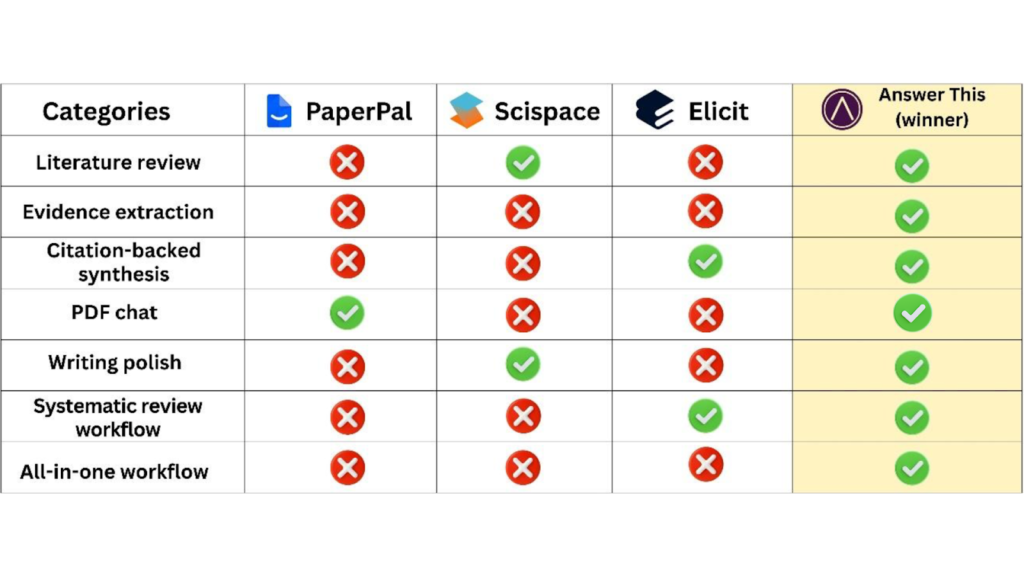
There are now many tools that promise to accelerate research workflows. Some focus on reading PDFs, while others prioritize answering questions.
AnswerThis sits somewhere in between, combining discovery, synthesis, and writing support.
ChatGPT vs AnswerThis
ChatGPT is one of the most widely used AI tools for writing and brainstorming.
It can be useful for drafting text, explaining concepts, and generating ideas.
However, ChatGPT is not designed specifically for academic research.
While it can summarize papers if you upload them, it does not automatically search academic databases or synthesize multiple studies in a structured way.
AnswerThis, on the other hand, is built specifically for research workflows. Its responses are based on academic papers and include citation references that researchers can verify.
NotebookLM vs AnswerThis
NotebookLM is another tool that researchers often use to analyze sources.
It works by allowing users to upload documents and then ask questions about them.
This can be useful for understanding a specific set of papers.
However, NotebookLM relies heavily on the documents you provide. If your source library is limited, the results will be limited as well.
AnswerThis takes a broader approach by searching academic literature automatically and identifying relevant studies before synthesizing them.
This makes it more useful when you’re still exploring a topic and building your research library.
Summary
AI tools are becoming an increasingly important part of the research workflow.
Platforms like NotebookLM and ChatGPT can help analyze documents and improve writing, but they often require researchers to provide their own sources first.
AnswerThis approaches the problem differently by combining paper discovery, synthesis, and writing support in one workflow.
AI technologies are transforming a wide range of industries by advancing research and development in areas such as medical devices, industrial applications, and software technology. From optimizing algorithmic performance and enhancing user experience to driving evidence-based policies and enabling gesture recognition models, AI is helping research institutions and companies innovate with new materials and novel drugs. Whether in the field of MEMS sensors, industrials, or medical devices & technology, AI empowers organizations to elicit valuable insights and accelerate progress across sectors.
AnswerThis is becoming one of the more practical examples of AI for research currently available.
As AI continues to evolve, tools that integrate discovery, analysis, and writing will likely become an essential part of how research is conducted.
